TL;DR
The lake of fire is the Bible's final destination for evil. Explore what Scripture reveals about this solemn reality and why it matters.
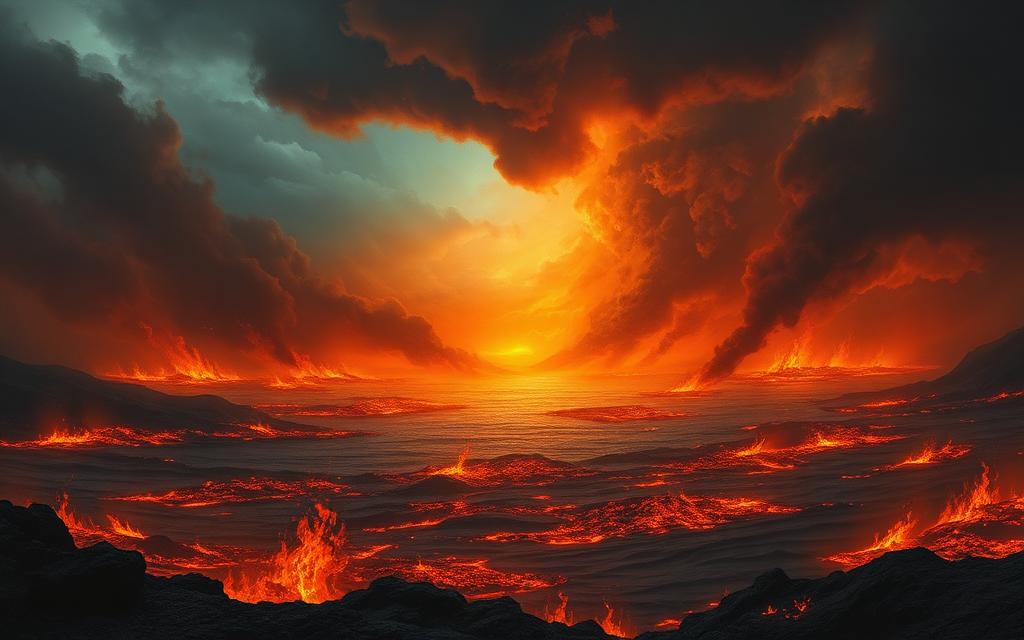
The lake of fire appears in the final chapters of Revelation as the ultimate destination of evil and all who align with it. It is distinct from hell (Hades), which serves as a temporary holding place. The lake of fire is eternal, final, and irreversible — the Bible's most solemn picture of divine justice.
Revelation 19:20 records the first occupants of the lake of fire: the beast and the false prophet, cast there alive after the Battle of Armageddon. They are followed by Satan himself after the Millennium: 'The devil, who deceived them, was thrown into the lake of burning sulfur... They will be tormented day and night for ever and ever' (Revelation 20:10).
The Great White Throne judgment (Revelation 20:11-15) determines the fate of all who have ever lived outside of Christ. 'Anyone whose name was not found written in the book of life was thrown into the lake of fire.' This is called 'the second death' — not annihilation, but permanent separation from God and all that is good.
Jesus spoke about this reality using the imagery of Gehenna — the Valley of Hinnom outside Jerusalem where refuse burned continuously. He described it as a place 'where the fire never goes out' (Mark 9:43) and where 'there will be weeping and gnashing of teeth' (Matthew 13:42). Whether literal flames or metaphorical, the suffering described is real and grievous.
Some ask how a loving God could allow eternal punishment. The Bible presents the lake of fire not as arbitrary cruelty but as the just consequence of choosing to reject God's authority and salvation. C.S. Lewis wrote, 'The gates of hell are locked from the inside.' Those in the lake of fire preferred self-rule over God's rule — and God ultimately honors that choice.
The existence of the lake of fire magnifies the importance of the Gospel. Christ endured the cross so that no one has to face this destiny. John 3:16 says, 'For God so loved the world that he gave his one and only Son, that whoever believes in him shall not perish but have eternal life.' The offer of rescue is open to all — but it must be received.
For believers, the lake of fire is not a threat but a reminder of what we have been saved from and the urgency of sharing the Gospel with others. Paul said, 'Since, then, we know what it is to fear the Lord, we try to persuade others' (2 Corinthians 5:11). Our salvation cost everything — and it is worth sharing with everyone.
Frequently Asked Questions
What does the Bible say about end times?
The lake of fire appears in the final chapters of Revelation as the ultimate destination of evil and all who align with it. It is distinct from hell (Hades), which serves as a temporary holding place. The lake of fire is eternal, final, and irreversible — the Bible's most solemn picture of divine justice.
What is the main point of "The Lake of Fire: What the Bible Says About Eternal Destiny"?
The lake of fire is the Bible's final destination for evil. Explore what Scripture reveals about this solemn reality and why it matters.
How can I apply this to my life as a Christian?
For believers, the lake of fire is not a threat but a reminder of what we have been saved from and the urgency of sharing the Gospel with others. Paul said, 'Since, then, we know what it is to fear the Lord, we try to persuade others' (2 Corinthians 5:11). Our salvation cost everything — and it is worth sharing with everyone.